
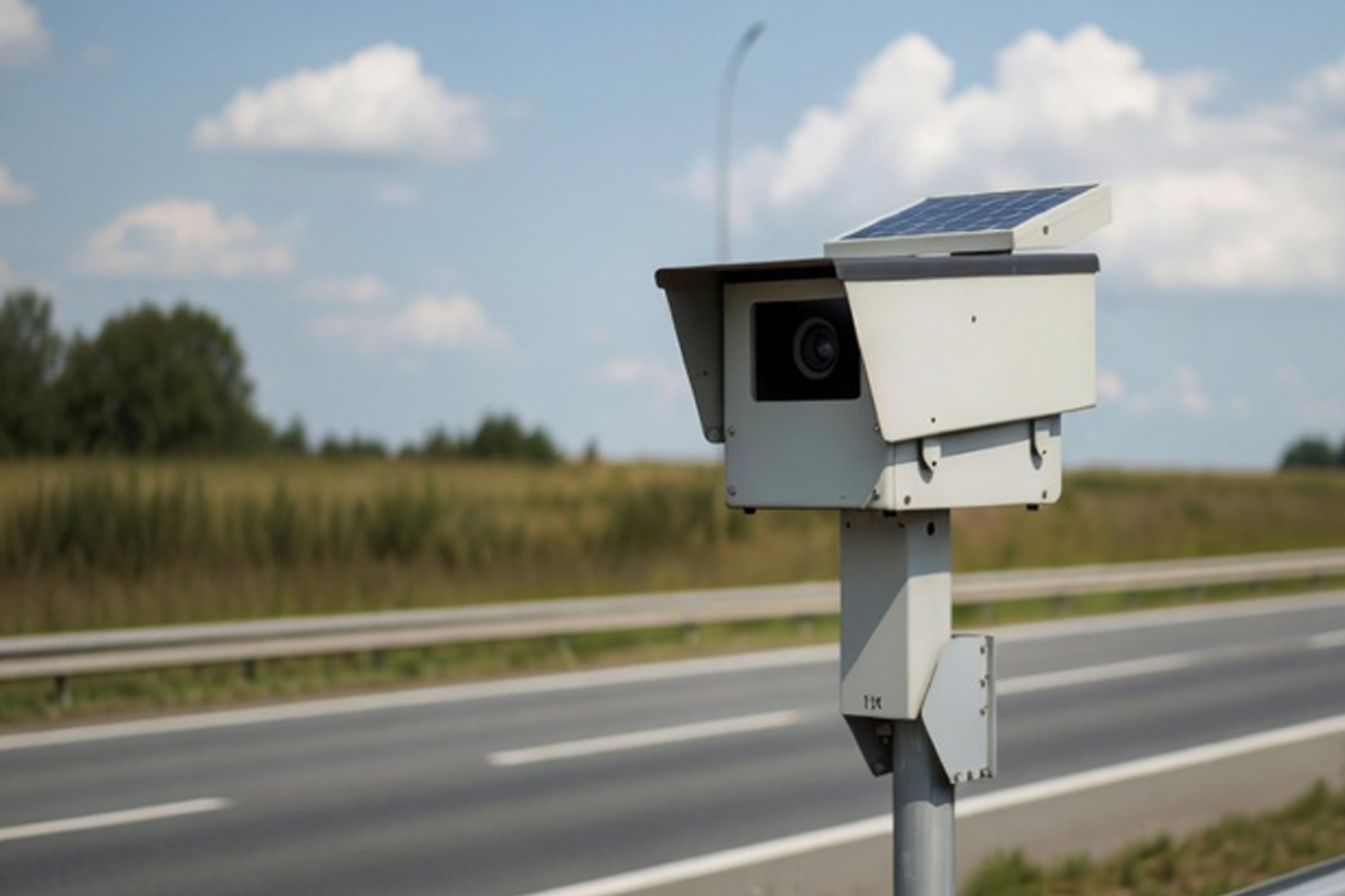
CITY HALL, ALGONA— At the March 23rd, 2026 City Council Workshop, Algona Police Chief James Schrimpsher renewed his push for mobile speed cameras, revealing he has been discussing the idea with council members for “a couple of months.”
Before the workshop, he distributed a PowerPoint presentation focused specifically on installing the devices along West Valley Highway.
Schrimpsher cited longstanding safety concerns in the area.
“There’s a lot of traffic issues over there,” he told the council. “In fact, the last two fatalities going way back almost 20 years have been on West Valley Highway on traffic collision.”
The chief said he hopes to partner with a company he called “Genoli Tech,” though he acknowledged that his pronunciation may have been incorrect.
Research by the Gazette turned up no record of any firm by that name offering speed cameras.
It is unclear whether Schrimpsher was referring to Jenoptik USA, a known manufacturer of automated enforcement equipment that offers both stationary and mobile speed cameras.
Schrimpsher outlined the legal requirements for moving forward. “Legal authority, um, RCW 46.63.220 and 46.63.250 govern the use and allow the use of speed cameras for all jurisdictions,” he explained.
“It’s based off your population. A jurisdiction our size—10,000 or less—can have up to two cameras based on certain requirements.”
He stressed that any installation must serve a documented safety purpose.
“There has to be a safety purpose required. So we have to have some historical data that hey, this is a high-traffic area. It’s unsafe. There’s a need for it,” Schrimpsher said.
The city would also need to adopt a local ordinance authorizing the program. Violations caught by the cameras would be treated as civil infractions only.
“All speed camera violations are civil infractions that are not criminal violations. They do not go on your driver’s license,” he noted.
“They are civil infractions. So they’re like a parking ticket is about the best analogy I can give.”
Council members took no formal action at the workshop.
The proposal appears to remain under review as the city weighs traffic safety against the cost and public acceptance of automated enforcement.